

A padel court’s structural strength comes from three things working together: the steel frame, the glass panels and a solid foundation. How strong the structure needs to be depends on where the court stands, and above all on how much wind it has to withstand.
How strong the structure needs to be depends on where the court stands, and above all on how much wind it has to withstand.
This guide explains how a court carries its loads, which site factors matter, and what to check in a supplier quote before you buy.
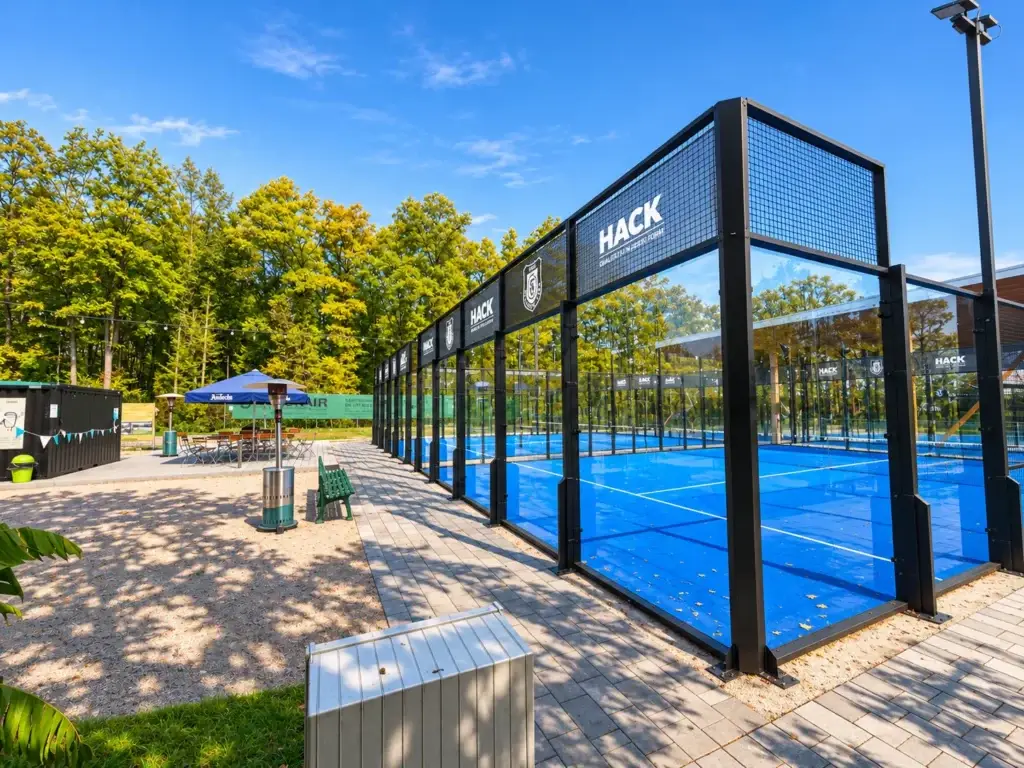
How a padel court carries its loads
The steel frame
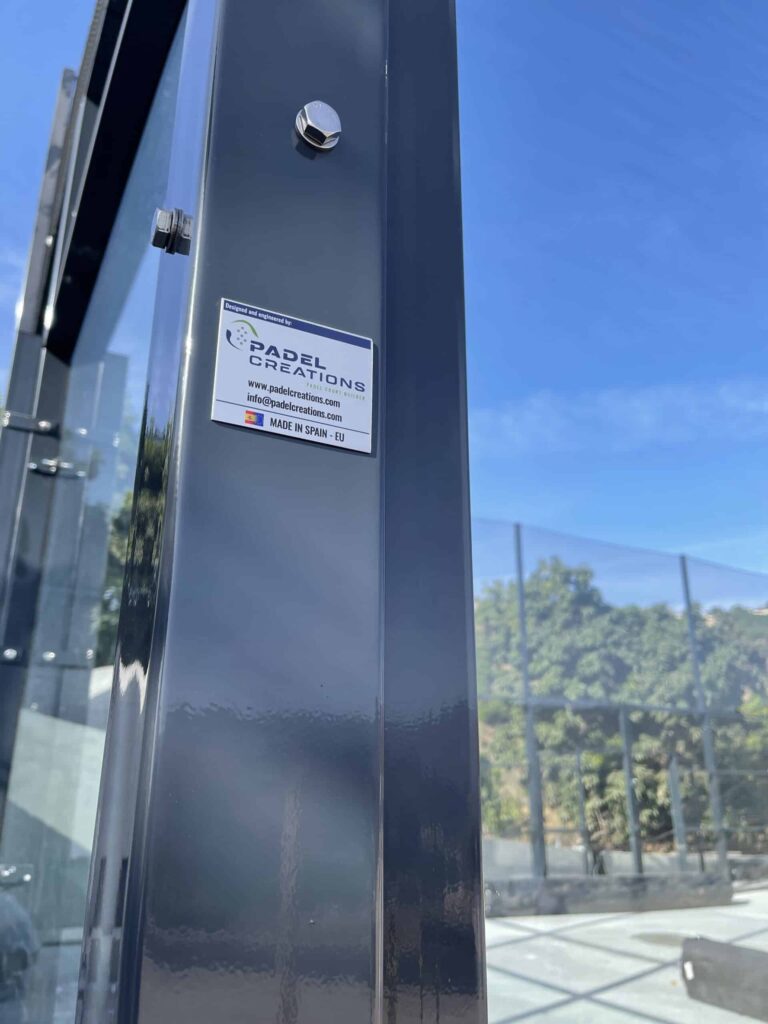
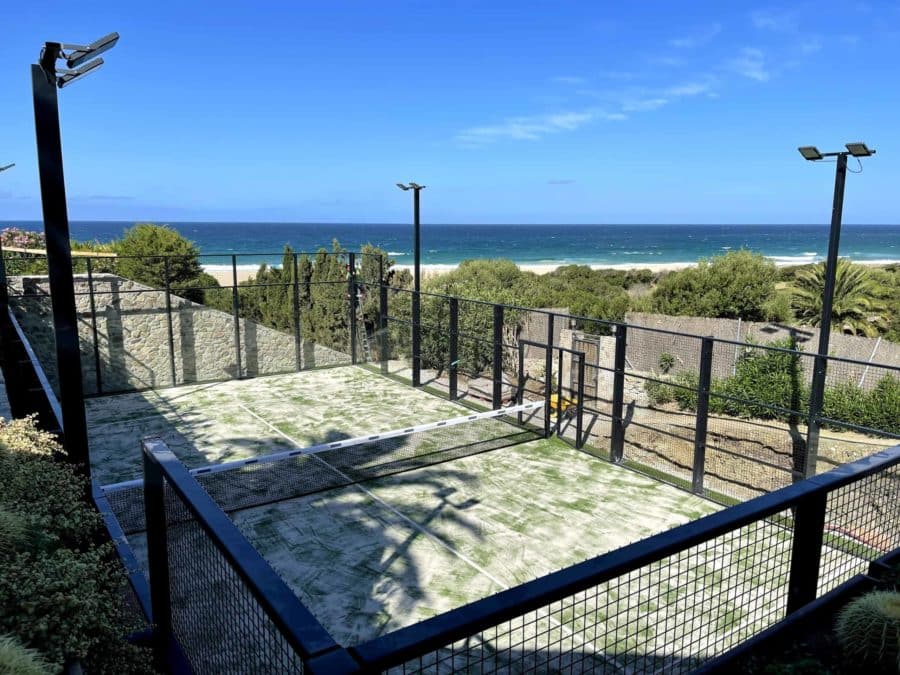
The steel frame is the backbone of the court. It holds the glass panels and the mesh and carries all loads, from wind, ball impacts and players, down into the foundation. The tube cross-sections, wall thickness and the position of the reinforcements decide how much load the frame can take.
In our experience, an undersized or poorly reinforced frame is the most common cause of structural problems. A frame that flexes too much puts stress on the glass fixings, and that’s when glass breaks.
Our frames are made of galvanised steel tube, welded and then powder-coated. For coastal and tropical sites we offer hot-dip galvanising for extra corrosion protection.
The glass panels
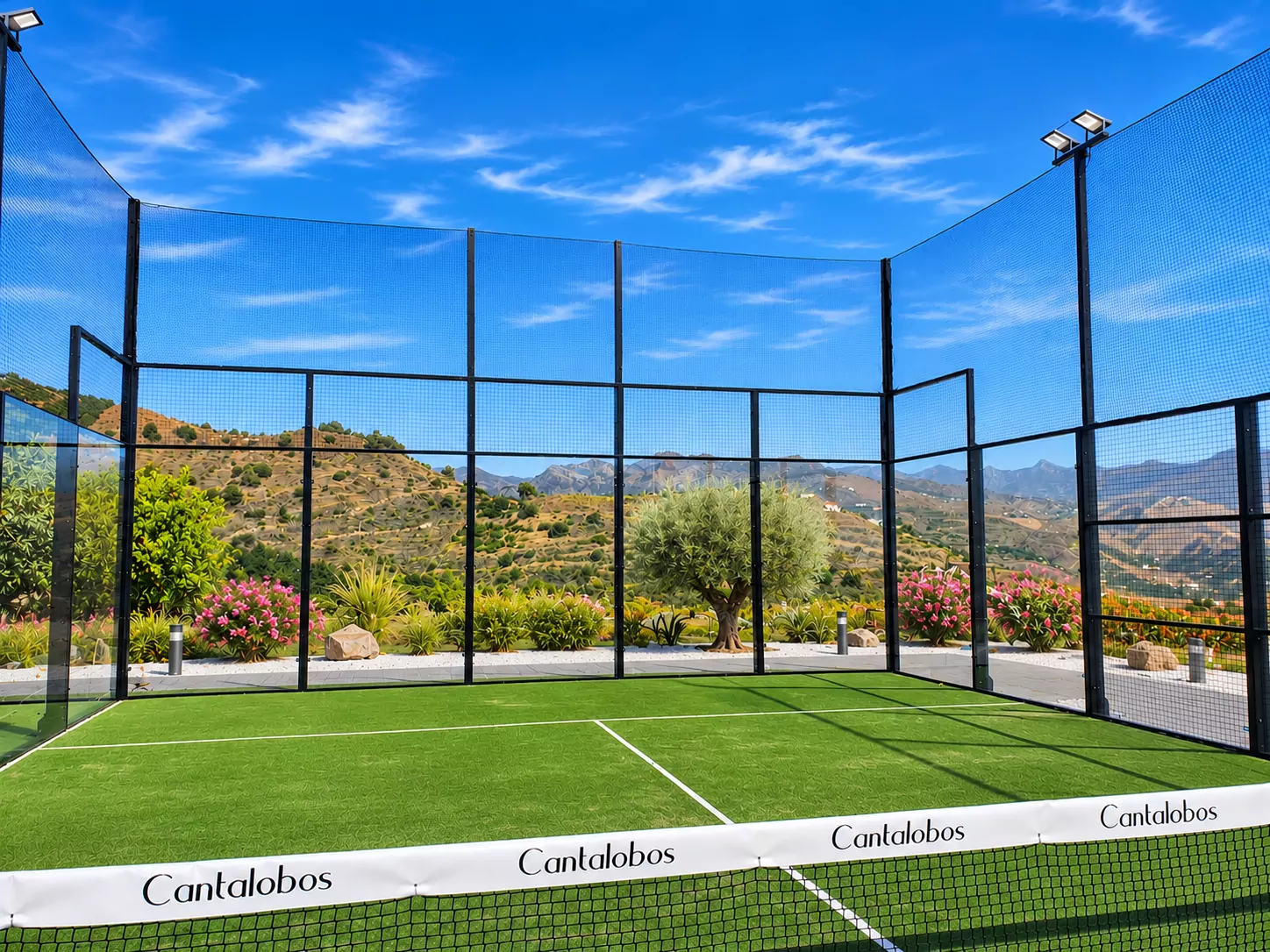
A padel court has over 100 m² of glass. On an outdoor court, every square metre of it is exposed to wind. We use 12 mm tempered safety glass to EN 12150. Its safety depends on the glass and also on the frame that holds it: if the frame moves, the glass fixings are overloaded.
Anchoring and foundation
The court is anchored into reinforced concrete, either a reinforced slab or a strip foundation. Soft or unsuitable surfaces, such as an existing tennis court surface, can’t take the anchors.
The foundation is built by your local contractor, according to our specifications.
Our guide to padel court foundations compares both systems.
Site factors that change the requirement
The strength a Padel Court needs is set after looking at the site, not before.
Two factors matter most:

Wind loads
Wind is the decisive load for an outdoor court. The glass and mesh act like a large sail. The wind load depends on:
- the local wind speed (wind zone)
- the height of the site, for example ground level or rooftop
- how open the surroundings are
- nearby buildings or trees that shelter the court
Wind loads are calculated to EN 1991-1-4 (Eurocode 1). In Germany the stricter German National Annex applies. → [PREMIUM Line: structural calculations to DIN and Eurocode],

Terrain category
The Eurocode also classifies the surroundings of a site into terrain categories, from 0 (open sea and coast) to IV (city centres). The more open the site, the higher the wind load: a court on the coast or in open countryside needs a much stronger structure than one between buildings. Read our guide to padel courts in high-wind zones.
Indoor, outdoor or rooftop: matching the model to the site
| Site | Suitable model | Why |
|---|---|---|
| Indoor, no wind exposure | Mod. BASIC, Mod. PANORAMIC PRO | No wind load: an efficient structure is enough, and Panoramic PRO adds maximum visibility for events and premium pricing |
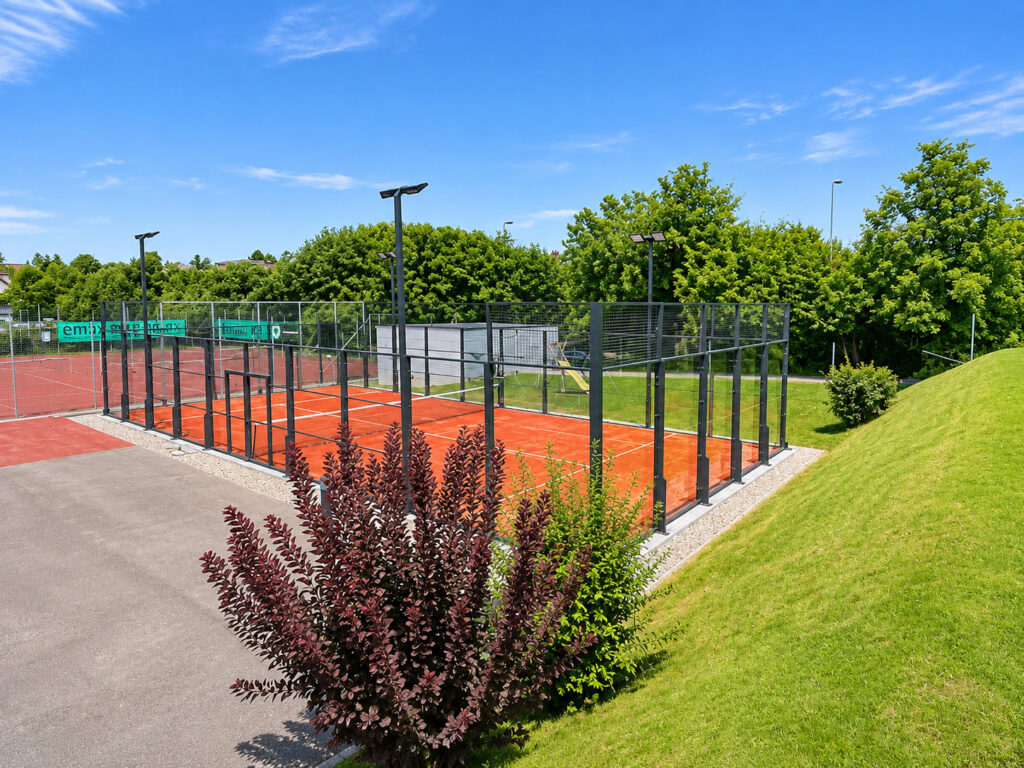
| Outdoor | PREMIUM Line | Reinforcement posts behind the frame and different strength classes for your wind zone |
| Rooftop or high-wind area | PREMIUM Line in a higher strength class | Full wind exposure, so a reinforced structure is designed for your site. → See our rooftop courts in [Switzerland] and [Hamburg] |
Important: courts designed for indoor use are not suitable for open outdoor sites. A lower price often means a lighter structure, and that can be a costly mistake outdoors.
What to check in a supplier quote
Ask every supplier these five questions:
- Which tube cross-sections and wall thicknesses are used for the posts and frames?
- Where are the reinforcements, and how is the frame stiffened?
- Which strength class is offered for your site, and for which wind zone?
- Is there a structural calculation, and to which standard (Eurocode, DIN)?
- What foundation and anchoring does the court need?
Key takeaway
If a quote does not answer these, you cannot really compare it.
Two courts at different prices may be two very different structures.
Why structural quality pays off
~85%
Average peak-hour occupancy at major UK padel clubs
~50%
of UK players say they struggle to book a court at peak times
Padel courts are busy. At major UK clubs, average peak-hour occupancy is around 85%, according to the Playtomic Global Padel Report 2026. Every day a court is closed for repairs is lost revenue at the times when it earns the most. In our experience, getting the structure right from the start costs far less than fixing it later.
Ready to talk about your project?
Tell us where you’re building, indoors, outdoors or on a roof, and we’ll recommend the right court line and strength class for your site.