

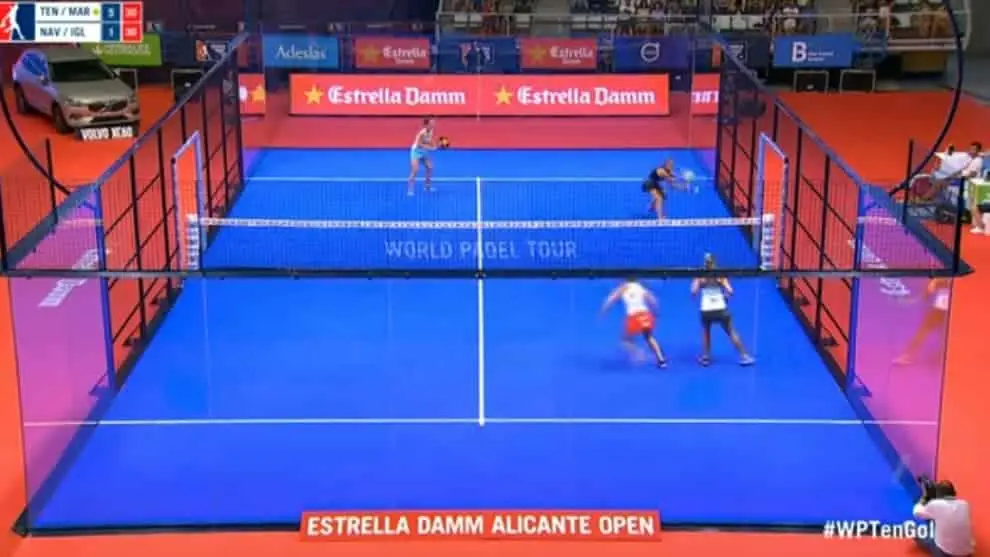
The artificial grass on a padel court does far more than make it look green. It decides how fast the ball bounces, how well players grip on quick turns and how kind the court is to knees and ankles over a long session.
Choose the wrong turf and you’ll notice it in every rally. In this guide we explain the main types of padel grass, what the sand infill does, how indoor and outdoor needs differ, and how to keep your surface playing well for years.
Why artificial grass matters on a padel court
The surface is the part of the court players touch on every single shot. It affects three things above all.
Ball bounce and speed
The fibre type, pile height and amount of sand control how high and how fast the ball comes off the floor. A consistent surface means a predictable game.
Player grip and safety
Padel is full of short sprints, stops and changes of direction. The turf needs enough grip to prevent slips, but enough give to let feet rotate without stressing joints.
Durability and cost of ownership
A good surface resists wear in the high-traffic zones near the net and the back walls, so you replace it less often.
Types of artificial grass for padel courts
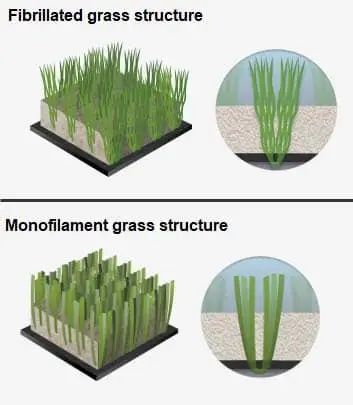
Padel turf is usually made from polyethylene or polypropylene fibres. The way those fibres are shaped defines three main families.
Fibrillated grass
How it’s made
Flat tape fibres are split into a fine net, which opens up and holds the sand infill well.
Best for
Clubs and community courts looking for a durable, cost-effective surface with a slightly slower game.
Monofilament grass
How it’s made
Each fibre is a single, individual strand, often with a profiled cross-section for strength and resilience.
Best for
Competition and premium courts. Monofilament gives a faster, more uniform bounce and a softer feel underfoot.
Texturised (curly) grass
How it’s made
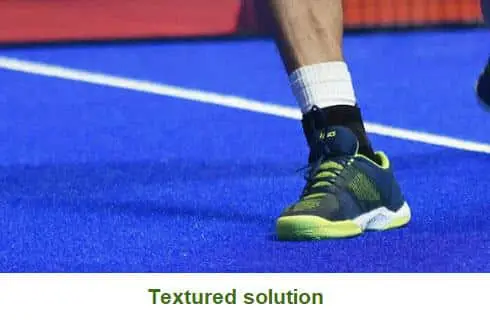
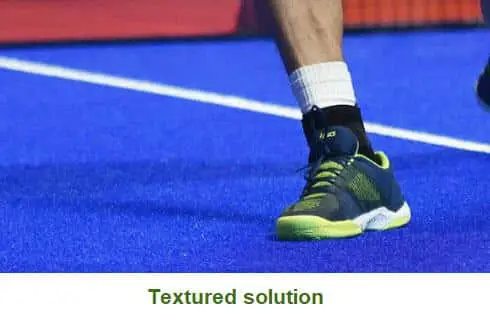
Crimped or curled fibres create a dense, compact layer that needs less sand and stays stable.
Best for
Indoor courts and low-maintenance installations where a consistent, cushioned surface is the priority.
Quick comparison
| Type | Game speed | Grip | Sand needed | Typical use |
|---|---|---|---|---|
| Fibrillated | Medium-slow | High | More | Clubs, outdoor |
| Monofilament | Fast | Medium-high | Medium | Competition, premium |
| Texturised | Medium | High | Less | Indoor, low maintenance |
The role of sand infill
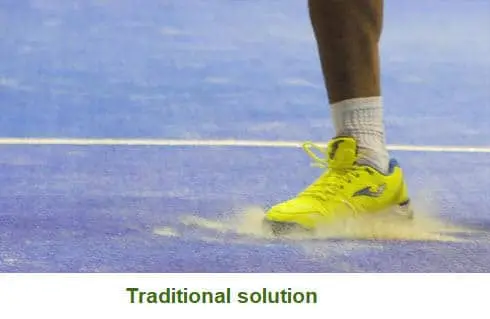
Silica sand is spread between the fibres to keep them upright, add weight and fine-tune how the court plays.
What the sand does
- Stabilises the fibres so they don’t flatten in high-traffic areas
- Controls ball bounce and court speed
- Gives players the right balance of grip and slide
Getting the quantity right
Too little sand and the court becomes slippery and fast. Too much and it turns heavy, slow and harder on the joints. The right amount depends on the turf type, so always follow the manufacturer’s specification.
Key specifications to compare
When you compare padel turf quotes, ask for these figures:
- Pile height: the length of the fibres, which affects how much sand the turf holds
- Yarn type and thickness (dtex): thicker fibres usually mean more durability
- Stitch density: more stitches per square metre give a denser, more even surface
- Backing and drainage holes: essential for outdoor courts
- UV stabilisation: keeps colour and fibre strength in sunny climates
- Certifications and warranty: check which tests the turf has passed and how long it’s guaranteed
Indoor vs outdoor padel grass
Outdoor courts
Outdoor turf must drain quickly and resist UV and temperature swings. In the UK and Ireland, fast drainage is the priority so the court is playable soon after rain.
Indoor courts
Indoors, drainage matters less and consistency matters more. Texturised or dense monofilament turf with less sand keeps dust down and the surface uniform.
How padel court grass is installed
- Prepare the base: a level concrete slab with the correct slope for drainage.
- Lay the rolls: turf is rolled out in strips across the court.
- Join the seams: strips are bonded with joining tape and adhesive.
- Mark the lines: white playing lines are inlaid or glued in place.
- Spread the sand: silica sand is added in layers and brushed into the fibres.
The quality of the base is just as important as the turf itself. Any unevenness in the slab will show up as dead spots and uneven bounce.
Maintenance tips for padel artificial grass
Weekly
- Brush the surface to redistribute sand, especially near the net and back walls
- Remove leaves, debris and dirt
Monthly
- Check seams and lines for lifting
- Top up sand in worn areas
Yearly
- Deep clean and decompact the infill
- Have a professional inspect the surface
How long does padel court grass last?
With regular maintenance, quality padel turf typically lasts several years before it needs replacing. Lifespan depends on how many hours the court is booked, whether it’s indoors or outdoors, and how well sand levels are kept. Uneven bounce, flattened fibres and bare patches are clear signs it’s time to resurface.