

Building a solid foundation for a padel court is straightforward for most contractors — but there are a few details worth getting right from the start. The groundwork determines not just the structural safety of the steel frame, but also how well your padel tennis flooring performs over time. Get it wrong, and even the best artificial turf won’t play the way it should.
The good news: this is not a skyscraper. The highest load-bearing demands come only at the perimeter, where the steel structure is anchored into the ground. The central playing area — 20 x 10 m — carries a load roughly comparable to a terrace. That matters when budgeting, because the whole slab doesn’t need to be engineered to the same spec.
For outdoor padel courts, local ground conditions play a bigger role than many clients expect. Frost depth, soil composition, typical rainfall — all of these affect which foundation type makes sense. Equally important: work with a local contractor whose systems and materials are already adapted to your region. A solution imported from another country rarely saves money once you factor in logistics and adaptation.
The foundation needs to meet four core specifications:
4 core specifications for a padel court foundation
- Measurements and anchor points — supplied with our offer.
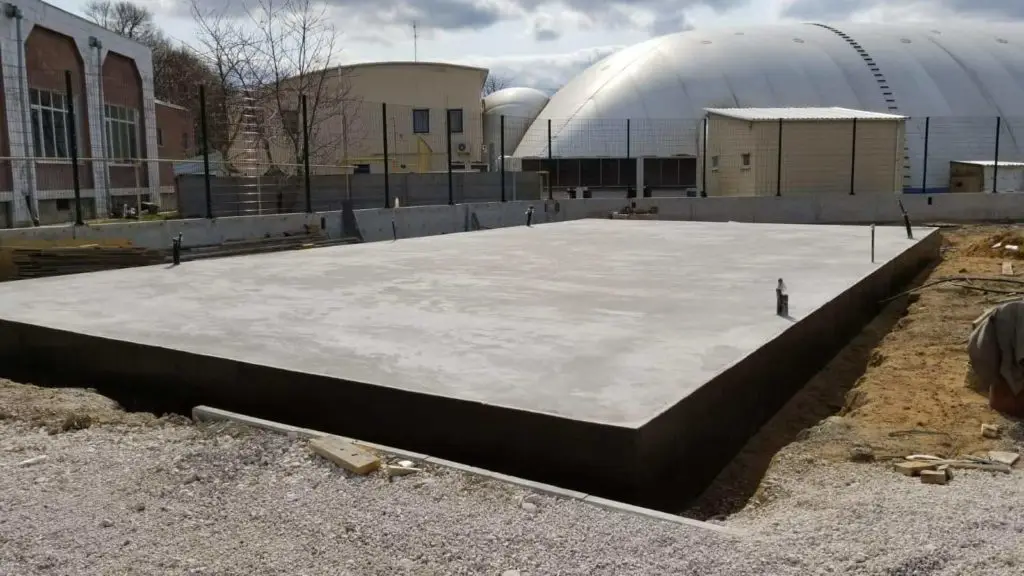
- Reinforced concrete strip foundation along the perimeter for structural anchoring. Strip width: approx. 40–50 cm / Depth: 50–80 cm
- Playing area drainage — either water-permeable surface or a slope of around 0.7%
- Surface quality — slightly rough is fine, but no cracks or uneven spots. Irregular ball bounce is the first thing players notice, and they won’t forget it.
Frost-free strip foundations in cold climates
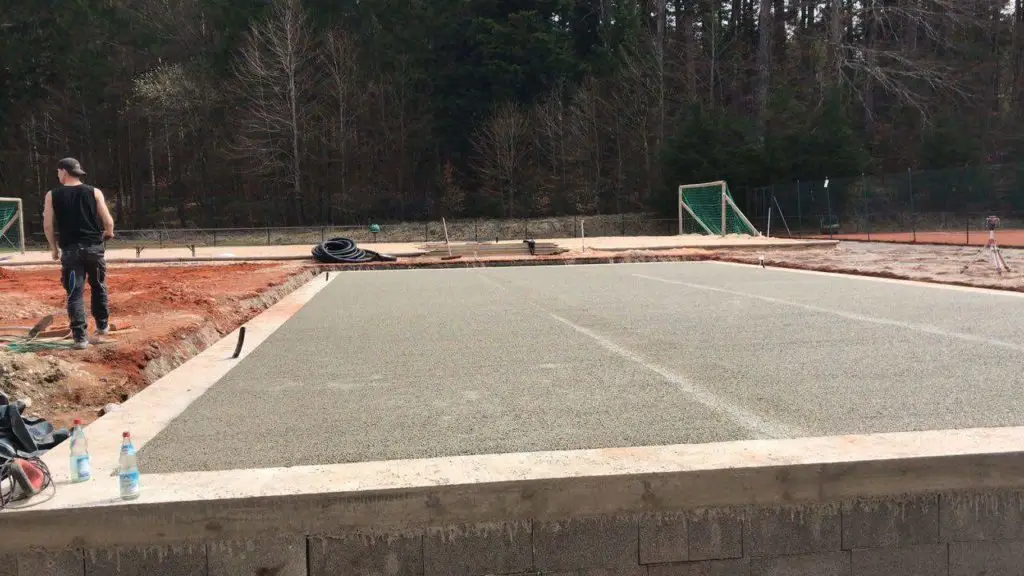
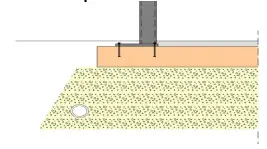
In cold countries, strip foundations must be frost-free: freezing water expands and can lift and crack the concrete. Lay them below the local frost line on a 16/32 gravel drainage layer. For most regions, a depth of 80 cm is sufficient. In Germany, the frost line is typically between 0.80 and 1.50 m, depending on local conditions: a shaded alpine valley freezes deeper than the mild, Atlantic-influenced west. More details in our guide to the padel court foundation.
Drainage layer under the foundation
As an extra precaution, a drainage layer of gravel (usually 16/32 grain) is laid under the foundation, so water drains away and cannot cause damage when it freezes.
In warm countries with very mild winters, the most cost-efficient option is a single slab with a slope. See our complete construction guide to the padel court foundation.
The Surface Layer and Why Drainage Matters
Whatever goes under your padel tennis flooring needs to handle rainwater properly. The artificial turf is not glued down — it sits freely across the full 200 m² area, weighted by approximately 3 tonnes of silica sand spread evenly across the court. That means surface water needs somewhere to go, quickly and reliably.
There are two standard binder options: bitumen (asphalt) or concrete. Each has a water-permeable version worth knowing about:
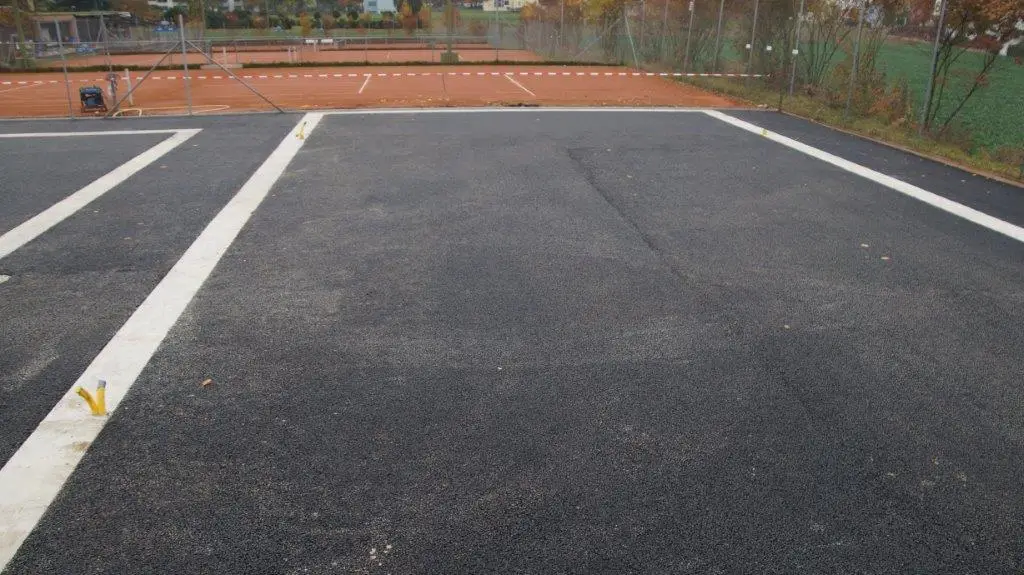
Water-permeable asphalt (drainage tarmac)
Used in sports construction as a drainage sub-layer. Water passes straight through to the layers below. The surface is rolled, giving a consistent, even finish.
- Asphalt top coat: approx. 5–10 cm
- Grain mix: approx. 2–16 mm
Drain concrete (water-permeable concrete)
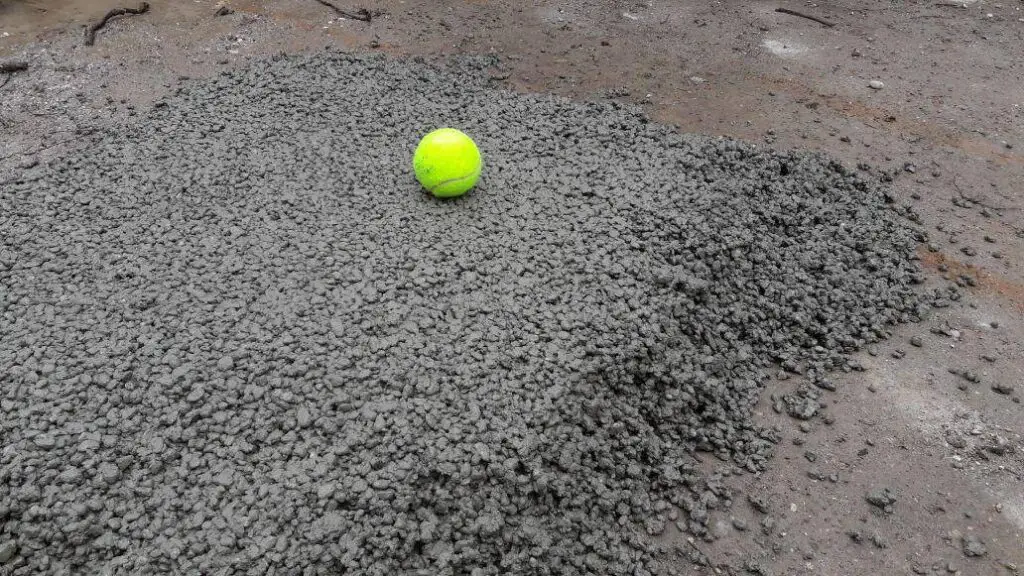
Manufactured with a minimum 15% void content, so water passes through rather than pooling. One thing to check before installation: any protruding stones on the surface should be knocked flat before the turf goes down. It’s a small step that protects the flooring from below.